

A decent garden shed is a solid, well-built structure. If yours is tongue and groove, sitting on a proper base and still watertight, taking it apart means splitting panels, cracking glass, snapping roof felt and losing the fit of every joint. Reassembling it in a new position rarely goes back together as tightly as it came apart. Moving it whole is usually quicker, cheaper and gentler on both the building and your garden.
It is also common here. In Bromley and across South East London, gardens are often long and narrow, with a shed at the far end that needs to shift to make room for a extension, a new patio, a home office pod or simply a more usable lawn. If you plan the move properly, a shed can travel ten metres or a hundred with nothing more than a few scuffs on the base.
Bad shed moves almost always start with a tape measure that stayed indoors. Before anything is moved, work out three sets of numbers.
Add at least 100 mm of clearance to every measurement. On a typical South East London side return of around 900 mm, that margin is the difference between a smooth slide and an afternoon of splintered fence panels.
Give yourself room to work. Cut back any shrubs, climbers or overhanging branches along the route, and lift pots, planters and garden ornaments out of the way. If plants cannot be moved, tie them back rather than snapping them off — most will recover from a bit of bending.
Then protect what stays in place. Fence panels, brick walls, drain covers, manhole lids and paving are all easy to damage under the weight of a loaded shed. Lay old plywood or scaffold boards over soft ground and lawn to spread the load, and run a strip of timber or cardboard along any wall the shed will pass close to.
Check the base as well. A shed on slabs or a concrete pad will usually lift cleanly. One sat on bare earth may have sunk over the years, and the corners will need freeing with a spade before anything moves.
There are two sensible approaches, and the right one depends on distance and access.
Skids and rollers suit short moves within the same garden or next door. Long, heavy timbers — scaffold boards or 100 mm x 100 mm posts work well — are laid under the shed as runners. Short lengths of scaffold tube or thick dowel act as rollers beneath them. The shed slides along the rollers, and the rear rollers are leapfrogged to the front as you go. Two or three people can move a modest 8 x 6 shed this way on level ground.
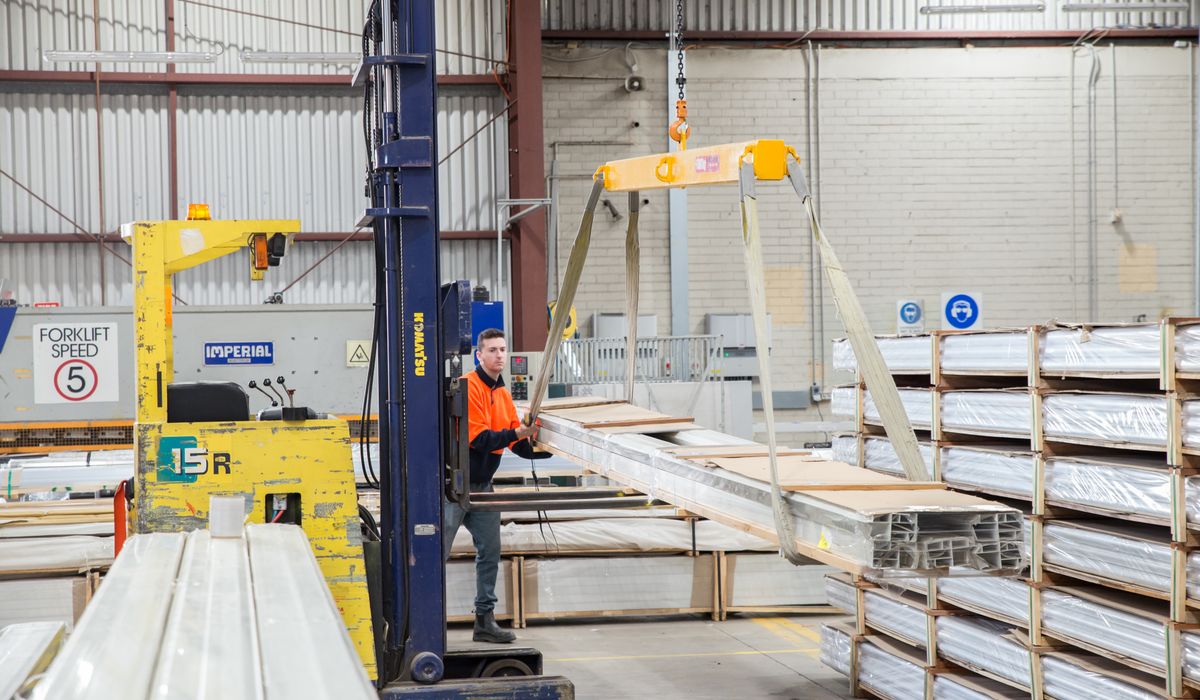
A flatbed or beavertail van is the better choice when the shed has to leave the property. Skids guide it to the roadside, then ramps or a tail lift take it onto the vehicle. For larger sheds, a small crane or Hiab lorry makes light work of the lift, particularly where there is no ramp space. Always check the vehicle's payload — a 10 x 8 shed with a felt roof can weigh comfortably over 300 kg before you add anything inside.
Empty the shed completely first. Tools, paint tins, shelving and anything stacked against the walls add weight and shift unpredictably. Remove loose glass and lock the doors with a strap around the frame so they cannot swing open mid-move.
Lift using the base or the floor joists, never the roof or wall panels. A trolley jack or two, paired with timber packers, will raise each corner in turn. Slide the skids underneath, then lower the shed gently onto them.
Once it is down, check the doors open and close properly. If they bind, the base is not level and small packers under the corners will usually sort it.
Some sheds are simply beyond a DIY move. Anything with a glass roof, a large apex structure, a concrete base bonded to the floor, or a route that involves steps, tight turns or a busy road is worth handing over. A local haulage and removals team will arrive with the right skids, straps, ramps and flatbed, and they will have moved sheds through the awkward side returns and narrow gates that are so common around Bromley, Beckenham, Penge and the surrounding areas.
Whether you do it yourself or call in help, the principles stay the same: measure carefully, clear and protect the route, lift from the base and take it slowly. Do that, and your shed will arrive in its new spot ready for another decade of service.

Bromleyhaulage Simple, genuine and looked after with care — the kind of place worth returning to.

Bromleyhaulage Simple, genuine and looked after with care — the kind of place worth returning to.

Check whether your removal firm provides goods in transit and public liability cover. Understand excesses, exclusions and how to make a claim before you sign any agreement.

Comments
ALina Kelian
19th May 2018 ReplyBromleyhaulage Simple, genuine and looked after with care — the kind of place worth returning to. ullamco laboris nisi ut aliquip ex ea commodo consequat.
Rlex Kelian
19th May 2018 ReplyBromleyhaulage Simple, genuine and looked after with care — the kind of place worth returning to. ullamco laboris nisi ut aliquip commodo.
Roboto Alex
21th May 2018 ReplyBromleyhaulage Real stories, useful guides and the occasional recommendation, all in one calm corner of the web. ullamco laboris nisi ut aliquip ex ea commodo consequat.